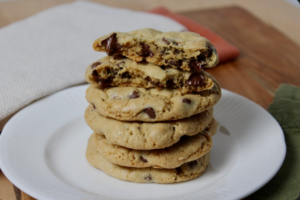
Cookies are among the easiest desserts to customize, and changing the way butter is prepared can make a noticeable difference in the final texture. Melted butter cookies are made with butter that is melted before being incorporated into the dough, creating a simple preparation method and a distinctive texture. Depending on the recipe, these cookies can be soft, chewy, crisp around the edges, or slightly dense in the center.
Using melted butter can also make cookie preparation more convenient because there is no need to wait for butter to soften naturally. The melted fat blends easily with sugar and other ingredients, making it possible to prepare cookie dough quickly. From classic chocolate chip cookies to oatmeal, peanut butter, and spice variations, the technique can be adapted to many different flavors.
What Are Melted Butter Cookies?
Melted butter cookies are cookies prepared with butter that has been liquefied before mixing it into the dough. Unlike traditional cookie recipes that often begin by creaming softened butter with sugar, melted-butter recipes use a different mixing process.
The melted butter coats the flour and combines with the other ingredients differently, which can influence gluten development and cookie structure. This often results in cookies with a chewy center and appealingly crisp edges.
The exact texture depends on the ratio of butter, flour, sugar, eggs, and other ingredients, as well as the baking temperature and time.
Why Use Melted Butter?
One of the biggest advantages of melted butter is convenience. Softening butter naturally can take time, while melting it can be done quickly.
Melted butter can also contribute to a rich buttery flavor and a chewy texture. Because the butter is already liquid, it can combine readily with brown sugar and other wet ingredients.
However, melted butter changes the structure of cookie dough, so recipes designed for softened butter should not always be converted to melted butter without adjusting other ingredients.
Choosing the Right Butter
Unsalted butter is commonly preferred because it allows the amount of salt in the recipe to be controlled separately.
Salted butter can also be used, but the additional salt should be considered when adjusting the recipe.
Butter provides both fat and flavor, so using fresh, good-quality butter can improve the overall taste of the cookies.
Avoid burning the butter unless a recipe specifically calls for browned butter. Melted butter should generally be smooth and liquid without being excessively hot when combined with other ingredients.
How to Melt Butter Properly
Butter can be melted gently on the stovetop or in short intervals in a microwave-safe container.
The goal is to melt the butter without overheating it. Excessively hot butter can affect eggs and other ingredients when they are added later.
After melting, allow the butter to cool somewhat before mixing it into the dough if the recipe requires it. Warm rather than extremely hot butter is generally easier to work with.
The Role of Sugar
Sugar affects both flavor and texture. Granulated sugar can encourage spreading and crispness, while brown sugar contains additional moisture that can contribute to a softer, chewier texture.
Many melted-butter cookie recipes use a combination of brown and granulated sugar to balance chewiness and crisp edges.
The type and quantity of sugar should remain close to the recipe’s intended proportions because changing it can significantly affect how the cookies spread and bake.
Adding Eggs and Other Wet Ingredients
Eggs provide structure, moisture, and richness. They also help bind the ingredients together.
When melted butter is used, the temperature of the butter is important before eggs are added. If the butter is extremely hot, it can partially cook the eggs and create an undesirable texture.
Vanilla extract is another common ingredient and can enhance the buttery and sugary flavors.
Other recipes may include milk, yogurt, nut butter, or other ingredients depending on the desired cookie style.
Combining the Dry Ingredients
Flour, baking soda, baking powder, salt, cocoa powder, spices, or other dry ingredients should generally be combined separately before being added to the wet mixture.
This helps distribute the leavening agents and salt more evenly throughout the dough.
Flour should be measured accurately because too much flour can create dry or dense cookies, while too little can cause excessive spreading.
For the most consistent results, weighing flour can be helpful when the recipe provides measurements by weight.
Avoiding Overmixing
Once the flour is added, the dough should generally be mixed only until the ingredients are combined.
Overmixing can develop gluten and produce cookies that are tougher than intended.
This is particularly important with melted butter because the dough may already have a relatively soft texture.
Mix gently and stop when there are no large streaks of dry flour remaining.
Choosing Chocolate and Other Add-Ins
Chocolate chips are one of the most popular additions to melted-butter cookies. Semi-sweet, milk, dark, or white chocolate can each create a different flavor profile.
Chopped chocolate can produce irregular pockets of melted chocolate throughout the cookie, while chips provide more consistent pieces.
Other possible additions include chopped nuts, dried fruit, coconut, toffee pieces, oats, seeds, or spices.
The quantity of add-ins should be balanced so that the dough remains capable of holding its shape.
Chilling the Dough
Some melted-butter cookie doughs benefit greatly from chilling. Because melted butter creates a softer dough, refrigeration can help the fat solidify before baking.
Chilling can reduce excessive spreading and allow the flavors to develop.
The required chilling time varies by recipe. A short chilling period may be enough for some doughs, while others benefit from several hours.
If the dough becomes very firm after refrigeration, allowing it to sit briefly at room temperature can make portioning easier.
Shaping the Cookies
A cookie scoop can help create evenly sized portions. Uniform dough balls tend to bake at a similar rate, producing more consistent results.
For cookies that spread significantly, leave sufficient space between dough portions on the baking sheet.
Some recipes benefit from gently flattening the dough before baking, while others should remain rounded.
The shaping method should match the intended final thickness and texture.
Baking Temperature and Timing
Oven temperature has a major effect on cookie texture. A higher temperature can set the edges quickly, while a lower temperature may encourage more gradual spreading and browning.
Baking time should be monitored carefully because cookies continue to firm as they cool.
For soft and chewy cookies, the centers may appear slightly underdone when the baking sheet is removed from the oven. They can continue cooking from residual heat.
For crisp cookies, a slightly longer baking time may be appropriate.
Cooling the Cookies
Freshly baked cookies are often fragile immediately after leaving the oven.
Allowing them to cool on the baking sheet for several minutes can help them set before transferring them to a wire rack.
Moving them too early can cause breakage, particularly when the centers are soft.
Once completely cooled, cookies can be stored in an airtight container to maintain their desired texture.
How to Prevent Excessive Spreading
Cookies made with melted butter can spread more than recipes made with softened butter. Several factors can contribute to this.
Warm dough, insufficient flour, excessive sugar, a hot baking sheet, or an oven temperature that is too low can all influence spreading.
Chilling the dough is one of the simplest ways to help control the shape.
Using parchment paper or a suitable baking surface can also help provide consistent results.
How to Make Cookies Softer
For softer cookies, brown sugar can contribute moisture and chewiness. Slightly underbaking the cookies can also help maintain a soft center.
Storing cooled cookies in an airtight container prevents moisture loss.
The balance of flour and fat is particularly important. Too much flour can make cookies dry, while too little can cause excessive spreading.
How to Make Cookies Crispier
If a crisp texture is preferred, the recipe may use more granulated sugar or a slightly longer baking time.
Flattening the dough can also increase surface area and encourage crispness.
Cookies should be allowed to cool completely before judging their final texture because they become firmer as they cool.
Flavor Variations
Melted-butter cookie dough can be adapted with many flavors.
Cinnamon and nutmeg can create a warm spiced cookie, while cocoa powder can produce a chocolate version. Lemon or orange zest can provide a fresh citrus flavor.
Peanut butter, almond butter, coconut, oats, chopped nuts, and dried fruit can also create different variations.
Using one or two complementary flavors often produces a more balanced cookie than adding too many ingredients.
Storage and Freshness
Cookies should be completely cooled before storage. Placing warm cookies into a sealed container can trap condensation and affect their texture.
An airtight container can help maintain freshness. If the cookies are intended to remain soft, limiting exposure to air is particularly important.
Cookie dough can also sometimes be prepared in advance and refrigerated or frozen, depending on the recipe. Portioning the dough before freezing can make later baking more convenient.
Common Mistakes to Avoid
One common mistake is adding eggs to butter that is too hot. This can affect the mixture and may partially cook the eggs.
Another issue is adding too much flour. Scooping flour directly from the container can sometimes result in compacted measurements and overly dry dough.
Overmixing after adding flour can also make cookies tougher.
Finally, removing cookies too early or baking them too long can change the intended texture. Watch the edges and centers carefully rather than relying only on the stated baking time.
Key Points to Remember
Melted butter provides a convenient alternative to softened butter and can create rich, chewy cookies with crisp edges.
The butter should generally be melted gently and cooled appropriately before being combined with eggs.
Sugar selection, flour measurement, mixing time, dough temperature, and chilling all influence the final texture.
Chilling the dough can help reduce excessive spreading, while careful baking preserves the desired balance between crisp edges and soft centers.
Different chocolates, nuts, spices, fruits, and extracts can be used to create a wide range of flavors.
Tips for Making Melted Butter Cookies
Melt the butter gently and avoid overheating it.
Allow the butter to cool before adding eggs or other temperature-sensitive ingredients.
Measure flour carefully to avoid dry or overly dense cookies.
Mix the dough only until the ingredients are combined.
Chill soft dough when necessary to control spreading.
Use evenly sized portions so the cookies bake consistently.
Leave enough space between dough portions on the baking sheet.
Allow freshly baked cookies to set briefly before transferring them to a cooling rack.
Store cooled cookies in an airtight container to preserve freshness.
Final Thoughts
Melted butter cookies are a convenient and versatile option for home bakers who want rich flavor and a satisfying texture without waiting for butter to soften naturally. The melted-butter method can produce cookies that are soft and chewy in the center with lightly crisp edges when the ingredients and baking process are properly balanced. Temperature, flour measurement, sugar selection, mixing, chilling, and baking time all play important roles in the final result. Once the basic technique is understood, the dough can be adapted with chocolate, nuts, spices, oats, dried fruit, or citrus flavors to create many different homemade cookie variations.
Frequently Asked Questions
1. Can I use melted butter instead of softened butter in any cookie recipe?
Not always. Melted and softened butter behave differently in cookie dough, so replacing one with the other can change spreading, texture, and structure. It is best to use a recipe specifically designed for melted butter.
2. Should melted butter be cooled before making cookies?
Usually, yes. Extremely hot butter can negatively affect eggs and other ingredients. Allowing it to cool to a warm or moderate temperature can make the mixing process easier and more reliable.
3. Why do melted butter cookies spread so much?
Excessive spreading can result from warm dough, too little flour, high sugar levels, a warm baking sheet, or insufficient chilling. Refrigerating the dough can often help control spreading.
4. Can I chill melted butter cookie dough?
Yes. Chilling can firm the butter and make the dough easier to handle. It can also help reduce spreading during baking and may improve the final texture.
5. How should melted butter cookies be stored?
Allow the cookies to cool completely and then store them in an airtight container at room temperature when appropriate. Proper storage helps prevent moisture loss and keeps the cookies fresh for longer.