
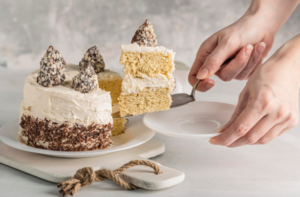
Planning a birthday party, office celebration, graduation, family gathering, or other special event often means figuring out how much dessert you need. A half sheet cake is a popular option because its rectangular shape makes it easy to decorate, transport, cut, and serve to a crowd. However, the term can be confusing because bakeries and pan manufacturers do not always use identical dimensions. Common sizes include 12 × 18 inches and 13 × 18 inches, while other variations are also available.
Understanding the actual dimensions, expected servings, ingredients, frosting requirements, and cutting method can help you choose the right cake for your occasion. Whether you plan to bake one at home or order from a bakery, a little preparation can prevent the common problem of running out of cake or ending up with far more leftovers than expected.
What Is a Half Sheet Cake?
A sheet cake is a large, shallow rectangular cake baked in a rectangular pan. Instead of being round or built into several tall tiers, it generally has a broad surface that makes it particularly convenient for large-scale decorating.
A half-sheet pan is approximately half the surface area of a full-sheet pan, although the exact dimensions depend on the type of pan being used.
Common dimensions include:
- 12 × 18 inches
- 13 × 18 inches
- 12 × 16 inches
- Other manufacturer-specific sizes
For this reason, it is better to confirm the exact dimensions when ordering rather than relying only on the name of the cake.
The depth can also vary. Some pans are relatively shallow, while deeper versions allow more batter or taller cakes.
How Many People Does It Serve?
The number of servings depends primarily on the dimensions and how the cake is cut.
A 12 × 18-inch cake has a surface area of 216 square inches. A 13 × 18-inch version has approximately 234 square inches.
A common way to estimate servings is:
Cake area ÷ serving area = approximate number of servings
For example, a 12 × 18-inch cake cut into 2 × 2-inch pieces provides:
216 ÷ 4 = 54 theoretical servings.
A 2 × 3-inch serving gives:
216 ÷ 6 = 36 servings.
Published sheet-cake guides commonly use 2 × 2-inch and 2 × 3-inch pieces when estimating party servings.
Typical Serving Guide
| Cake Dimensions | 2 × 2-inch Pieces | 2 × 3-inch Pieces |
|---|---|---|
| 12 × 16 inches | About 48 | About 32 |
| 12 × 18 inches | About 54 | About 36 |
| 13 × 18 inches | About 54–58 | About 36–39 |
These figures are planning estimates. Actual yields can be lower if the cake needs trimming, if the edges are uneven, or if guests receive larger portions.
Why Serving Estimates Vary
You may see different serving numbers for what appears to be the same size cake. This usually happens because there is no universal serving standard.
One bakery might cut generous party portions, while another may use smaller pieces designed for a dessert buffet. Wedding-style portions can be considerably smaller than everyday birthday servings.
The following factors affect the final count:
- Actual pan dimensions
- Cake thickness
- Number of layers
- Serving size
- Amount of frosting
- Whether the cake is trimmed
- Whether other desserts are available
- How carefully the cake is cut
This is why giving a bakery the number of guests you need to serve can sometimes be more useful than simply requesting a particular sheet designation.
Choosing the Right Size for Your Event
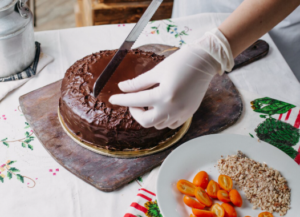
Birthday Parties
For birthdays, a rectangular cake provides plenty of decorating space for names, messages, characters, flowers, balloons, or themed designs.
If approximately 30 to 40 people will attend, a 12 × 18-inch cake can be suitable when portions are moderate. A larger guest list may require smaller pieces or a larger cake.
Office Parties
Office gatherings often include other food and desserts. In that situation, smaller cake pieces may be appropriate because guests may not want a large serving after eating lunch or snacks.
A 2 × 2-inch portion can be a practical starting point when cake is one of several desserts.
Graduations
Graduation cakes often benefit from the large decorating surface. You can include:
- Graduate’s name
- Graduation year
- School colors
- Cap and diploma designs
- Inspirational messages
- School logo-inspired decorations
The rectangular format also makes it easy to divide the cake into enough pieces for a group celebration.
Weddings and Formal Events
For weddings and formal gatherings, smaller portions are frequently used. This can significantly increase the number of servings from the same cake surface.
If you are ordering for a formal event, ask the bakery exactly what serving size they use when giving you their serving estimate.
Baking at Home
Making a large rectangular cake at home requires more planning than making a standard round cake, but the process is manageable.
Prepare the Pan
Use a pan that matches the recipe and amount of batter. Grease the pan thoroughly, paying particular attention to corners.
You can also use parchment paper on the bottom to make cake removal easier.
Prepare the Batter
The quantity of batter depends on the pan depth and recipe. Avoid filling the pan excessively because the batter needs room to rise.
Follow the recipe’s instructions for:
- Mixing time
- Oven temperature
- Baking duration
- Pan preparation
- Cooling
Different cake recipes rise differently, so a recipe designed for a smaller pan should not automatically be multiplied without checking the expected volume.
Bake Evenly
Large cakes can sometimes bake unevenly because the center takes longer to cook than the edges.
Keep an eye on the cake toward the end of the recommended baking time. A toothpick inserted near the center should generally come out clean or with a few moist crumbs, depending on the recipe.
Avoid repeatedly opening the oven because sudden temperature changes can interfere with baking.
Cooling the Cake Properly
Cooling is one of the most important steps.
After removing the cake from the oven:
- Allow it to rest in the pan for the time recommended by the recipe.
- Loosen the edges carefully.
- Transfer or leave it on a stable surface according to the recipe.
- Let it cool completely before decorating.
Applying frosting to a warm cake can cause it to soften, melt, or slide.
For easier decorating, some bakers chill the cake after it has cooled. A chilled cake can be easier to handle and slice cleanly.
Choosing Frosting
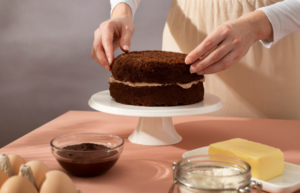
The frosting can change both the appearance and flavor of the finished dessert.
Buttercream
Buttercream is a classic choice because it is easy to spread and pipe. It works particularly well for birthday decorations, borders, flowers, lettering, and colorful designs.
Cream Cheese Frosting
Cream cheese frosting provides a tangy flavor that pairs especially well with carrot cake, red velvet, spice cake, and certain chocolate cakes.
Because it is softer than some buttercreams, temperature control can be important during decorating.
Whipped Frosting
Whipped frosting is lighter and less dense than traditional buttercream. It can be a good option when you want a softer dessert.
However, its stability can vary, particularly in warm conditions.
Ganache
Chocolate ganache creates a rich finish and can be used as a smooth coating or decorative drip.
It works especially well with chocolate, vanilla, coffee, and hazelnut-flavored cakes.
Popular Flavor Combinations
A large rectangular cake can be made with almost any flavor combination.
Some popular choices include:
- Vanilla cake with vanilla buttercream
- Chocolate cake with chocolate frosting
- Vanilla cake with strawberry filling
- Chocolate cake with vanilla buttercream
- Red velvet with cream cheese frosting
- Carrot cake with cream cheese frosting
- Lemon cake with berry filling
- Funfetti cake with vanilla frosting
- Marble cake with chocolate frosting
For a large gathering, classic flavors are often practical because they appeal to a broad range of guests.
Decorating Ideas
One of the biggest advantages of a sheet-style cake is the large decorating surface.
Simple and Elegant
Use smooth frosting with piped borders and a short message. Add fresh fruit or a few decorative flowers for a clean appearance.
Birthday Theme
Match the cake to the guest of honor’s favorite colors, hobbies, sports, characters, or interests.
Floral Design
Piped buttercream flowers can create a sophisticated appearance without requiring elaborate fondant work.
Chocolate Design
Chocolate curls, ganache, chocolate pieces, and decorative piping can transform a simple cake into a rich-looking dessert.
Seasonal Design
For holidays and seasonal gatherings, consider:
- Autumn leaves
- Snowflakes
- Spring flowers
- Summer fruit
- Holiday ornaments
- Seasonal colors
How to Cut It Cleanly
Cutting a large cake evenly is easier when you plan the grid before making the first cut.
A ruler can help create consistent portions.
For example, a 12 × 18-inch cake can be divided into a simple grid for 2 × 2-inch pieces. Because both dimensions divide evenly by two, the resulting cuts are straightforward.
For larger 2 × 3-inch pieces, mark one dimension in 2-inch sections and the other in 3-inch sections.
A sharp knife is important. Clean the blade between cuts when frosting begins to accumulate.
Helpful Cutting Tips
- Chill the cake if the frosting is soft.
- Use a long, sharp knife.
- Mark the cutting pattern before slicing.
- Wipe the knife between cuts.
- Avoid pressing down too hard.
- Use a cake server or spatula to transfer pieces.
Transportation Tips
Large rectangular cakes can be awkward to transport.
Keep these tips in mind:
- Use a sturdy cake board.
- Choose a box that fits the cake securely.
- Keep the cake level during transportation.
- Avoid placing heavy objects next to it.
- Keep temperature-sensitive frosting cool.
- Transport it on a flat surface rather than a vehicle seat.
If possible, decorate the cake on its final board so it does not need to be transferred after decorating.
Ordering From a Bakery
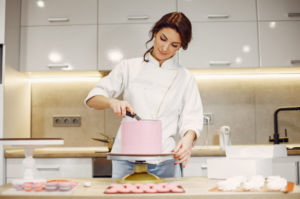
When ordering, give the bakery more information than just the cake name.
Ask about:
- Exact dimensions
- Number of servings
- Serving size
- Cake flavor
- Filling
- Frosting
- Decoration
- Pickup time
- Storage requirements
For example, instead of simply asking for a certain sheet size, tell the bakery that you need enough dessert for approximately 40 guests and ask which dimensions and portion size they recommend.
This reduces confusion caused by different bakery definitions.
Cost Considerations
The price of a large rectangular cake depends on more than its physical size.
Factors can include:
- Cake flavor
- Premium fillings
- Frosting type
- Number of layers
- Custom decorations
- Edible images
- Fondant
- Fresh flowers
- Intricate piping
- Special dietary requirements
A simple frosted cake will generally require less decorating labor than a highly customized design.
If your budget is limited, choose a simple base design and use one or two decorative elements as focal points.
Storage and Leftovers
If you have leftover cake, store it according to the ingredients used.
Cake with perishable fillings or frostings may need refrigeration, while some basic cakes can remain at room temperature for a limited period.
Always follow the recipe or bakery’s storage instructions.
For longer storage, individual slices can be wrapped securely and frozen when the particular cake and frosting are suitable for freezing.
Key Points to Remember
- Dimensions vary, so confirm the actual size before ordering.
- Common versions include 12 × 18 and 13 × 18 inches.
- Serving count depends heavily on slice size.
- A 12 × 18-inch cake can provide about 36 pieces at 2 × 3 inches or about 54 pieces at 2 × 2 inches.
- Larger or smaller pans can change the yield.
- Cake height and layers influence practical serving decisions.
- Chill the cake when necessary for cleaner cutting and easier decorating.
- A sturdy cake board helps with transportation.
- Ask bakeries about exact dimensions and serving standards.
- Plan portions according to the number of guests and whether other desserts are being served.
Final Thoughts
A half-sheet style cake is a practical choice when you need to serve a group without moving to a much larger full-sheet format. Its generous rectangular surface provides plenty of room for creative decoration, personalized messages, themed designs, and attractive presentation.
The most important thing to remember is that the name alone does not tell you exactly how many people the cake will serve. Pan dimensions and portion sizes vary, so checking the actual measurements is essential.
Whether you are baking at home or ordering from a professional bakery, start with your guest count, decide how generous each portion should be, and then choose the appropriate dimensions. With the right planning, you can have an attractive cake that provides enough servings without unnecessary waste.
FAQs
1. What is the most common size for this type of cake?
Common dimensions include 12 × 18 inches and 13 × 18 inches, although exact sizes vary by bakery and pan manufacturer. Always confirm the measurements before ordering.
2. How many people can a rectangular sheet cake serve?
The answer depends on the cake dimensions and portion size. A 12 × 18-inch cake can provide roughly 36 servings when cut into 2 × 3-inch pieces or about 54 servings when cut into 2 × 2-inch pieces.
3. Can I make one at home?
Yes. A suitable rectangular pan, the correct amount of batter, proper baking time, and adequate cooling are the main considerations. A recipe designed specifically for the pan makes the process easier.
4. What is the best frosting for a large cake?
Buttercream is a versatile choice because it spreads and pipes well. Cream cheese, whipped frosting, and ganache are also options depending on the cake flavor, occasion, and storage conditions.
5. How should I cut a large rectangular cake?
Plan a grid before cutting, use a sharp knife, and clean the blade between cuts. Measuring the cake and marking consistent intervals can help produce evenly sized portions.

Leave a Reply